
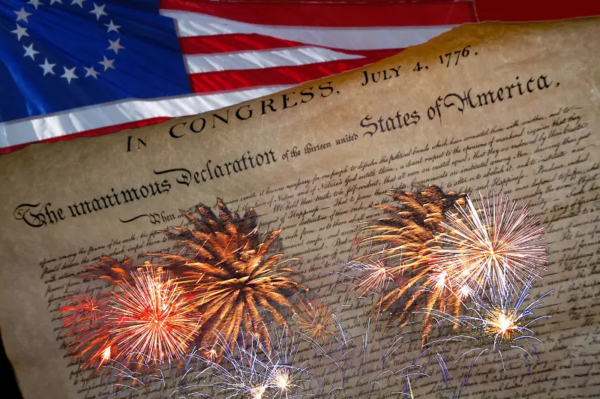
July 4, 2026 marks something rare — not just a national holiday, but a genuine milestone. America turns 250.
The fireworks are spectacular. The speeches are patriotic. The parades are joyful.
But here’s what most people celebrating this semiquincentennial won’t stop to think about: self-governance doesn’t happen at the parade. It happens in your office.
The Oldest Job in Democracy
Before the Declaration. Before the colonies. Before Rome had senators or England had a parliament — there was a clerk.
The profession predates written history as most people know it. For millennia, in civilizations across the ancient world, communities understood that self-governance required someone to keep an honest account of what was decided, who held what, and what the public was owed.
Before writing came into use, the early keepers of archives were called Remembrancers — their memory served as the public record. The Hebrew translation of town clerk, Mazkir Ha’ir, still means “city reminder.” Ancient Greece had a city secretary who read official documents publicly — and at the opening of every meeting, one of his first duties was to decree a curse upon anyone who should seek to deceive the people. (Tillamook, Ore.)
Accountability to the public. Built into the job. Since Athens.
When colonists established settlements in North America, they didn’t invent the clerk’s office. They brought it with them. The office of town clerk of Wethersfield, Connecticut was established in 1639 — more than 135 years before the Declaration of Independence — because self-governance was already unthinkable without one. (Conn. State Library)
America didn’t create the municipal clerk. In many ways, the municipal clerk helped create America.
The Clerks Who Signed the Declaration
When 56 delegates gathered in Philadelphia in the summer of 1776, at least one of them was, at that very moment, serving as a municipal clerk — and two others had built their paths to revolution keeping the official record for their colonial assemblies.
William Williams of Connecticut had been elected town clerk of Lebanon in 1752, managing municipal records and proceedings — a position he would hold for 44 years. He was sitting town clerk when he signed the Declaration. His was the same role, at the same scale, as the clerks reading this post today.
William Ellery of Rhode Island had served as Clerk of the Rhode Island General Assembly — responsible for the official record of that colonial body — before studying law, joining the Sons of Liberty, and ultimately being sent to the Continental Congress in 1776. Samuel Adams served as Clerk of the Massachusetts House of Representatives, responsible for recordkeeping and official correspondence with other colonial assemblies — and it was from that desk that he proposed what would become the Continental Congress.
Three men. Three clerks to governing bodies — local, colonial, and continental. All three signed the Declaration.
And there is one more remarkable detail. As clerk to the secretary of the Second Continental Congress, Timothy Matlack penned the official engrossed parchment of the Declaration of Independence — the document now on display in the National Archives. The text that announced the forming of a nation was written out, in a clerk’s careful hand, by a clerk.
These weren’t men who became important despite their clerical roles. The clerk’s office was where civic life was learned, practiced, and trusted — a position of genuine public authority precisely because it sat at the center of everything a community decided and recorded. For the Founders, it was a natural place to start.
What the Founders Actually Built
The Declaration of Independence was the vision. But local government — your government — is where that vision gets implemented, meeting after meeting, record after record, year after year.
City clerks who conduct elections, administer council meetings, create and preserve the record, and provide public notice are integral to the functioning of a democratic system of government — partners in democracy.
Not supporters of democracy. Not adjacent to it. Partners in it.
Democracy depends on citizen oversight to retain its integrity. When laws and actions are clearly set forth and the public record is accessible, the people are able to effectively exercise supervision. That accountability lives in your office — in the agenda posted on time, the minutes recorded accurately, the public notice published before the meeting, the board appointment documented and confirmed.
None of that is abstract. All of it is democracy in practice.
The Record Nobody Sees
Professor William Bennett Munro, writing the first textbook on municipal administration, put it plainly: “No other office in municipal service has so many contacts. It serves the Mayor, the City Council, the City Manager, and all administrative departments, without exception. All of them call upon it, almost daily, for some service or information. Its work is not spectacular, but it demands versatility, alertness, accuracy, and no end of patience.”
He wrote that decades ago. The words haven’t aged.
The clerk’s work is not spectacular, and that’s precisely the point. Spectacular government is government in crisis. The steady, accurate work of a well-run clerk’s office is what functional democracy actually looks like.
250 Years. Still Standing.
This July 4th, while the nation marks 250 years, we’d invite every municipal clerk and their office staff to pause for a moment that isn’t on the official program.
You are the institutional thread. The role you hold is older than this republic, older than those colonies, as old as the idea that communities owe each other an honest account of what was decided and why. The people who built this country understood that. Some of them held your job.
At ClerkBase, our mission has always been straightforward: give clerks the tools they need to do this work well. Because when your office works well, democracy works. And that’s been true a lot longer than 250 years.
Happy Independence Day from all of us at Team ClerkBase.